When a hidden leak becomes an emergency
A damp spot is a clue and not always a crisis. A ceiling stain that grows, a wall that feels warm or a floor that has started to lift are crises. So is a meter that spins when every fixture is off. Find the main shutoff and learn where it is before you need it.
Do this while you wait
- Turn off the main water valve at the house or the street meter.
- Switch off power to any wet room before touching anything.
- Move furniture and rugs away from damp areas.
- Take photos of stains and the meter reading.
- Do not cut into drywall, because we locate the source first.
The meter test and the high water bill
The cheapest leak detector is the water meter. Turn off every fixture and appliance, then watch the meter. Most meters have a low flow indicator, a small triangle or dial that moves when any water passes. If it moves with everything off, water is leaving the system somewhere between the meter and your fixtures.
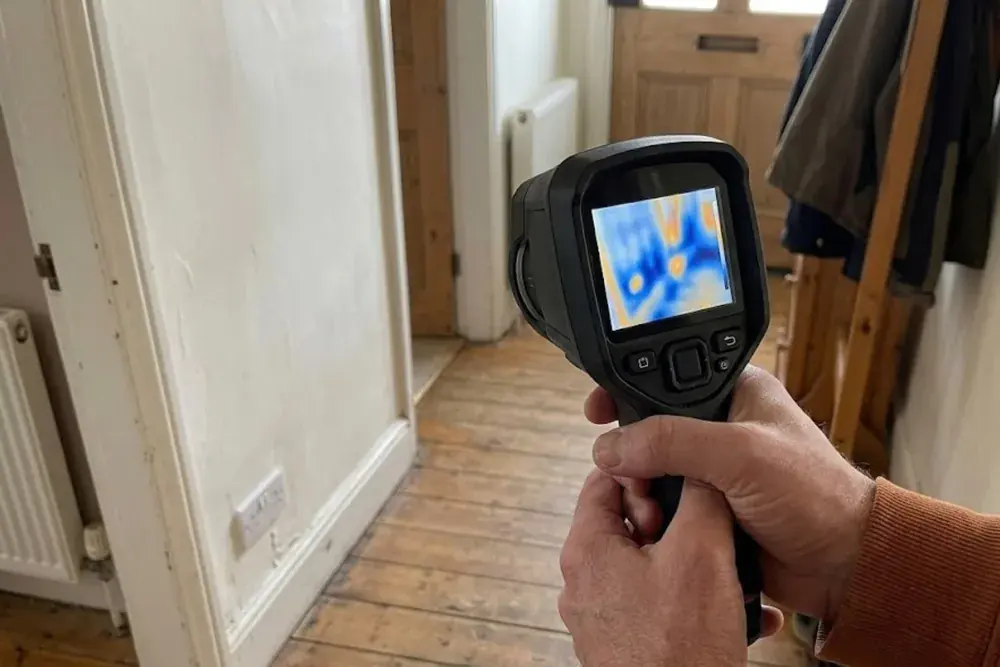
That tells you a leak exists. It does not tell you where. We take it from there with acoustic listening, thermal imaging and pressure testing of the lines, then isolate the section and mark the spot before anything is opened.
Where leaks hide in Winter Garden homes
Most local homes sit on concrete slabs, so supply lines often run in or under the slab, and drains run in it. Older homes in the Historic Residential District may have crawl spaces, where a leak can run for months before it reaches a floor. Ceilings and attic runs show leaks as stains and sagging.
| Location | Common signs | Typical method |
|---|---|---|
| Under the slab | Warm floor spots, running meter, sound of water at night | Acoustic and thermal detection, pressure test. |
| Wall or ceiling | Stain, bubbling paint, musty smell | Moisture mapping, thermal imaging. |
| Crawl space | Damp odor, warped floors, mold | Visual and moisture inspection, pressure test. |
| Buried water line | Wet yard, drop in pressure, meter spinning | Acoustic listening, line isolation. |
| Irrigation system | Unexplained wet beds or a high bill after sprinkler cycles | Zone isolation and pressure test. |
| Meter box | Water pooling at the curb box | Check connections and valves. |
Irrigation, pools and yards
Sprinkler leaks are common in Florida because systems run often and valves, heads and buried lines wear. A zone that stays wet after the cycle ends is a good lead. Pool and spa leaks are a different specialty, so we tell you if the loss is in the plumbing lines to the equipment or in the shell, and refer you accordingly when the shell is the cause.
A leak at the meter box or on the yard side of the shutoff may be the utility's responsibility rather than yours. Photograph it, note the meter reading and call the city before you pay for a repair.
What happens after we find it
- Confirm the leakMeter test and pressure check on the supply side.
- Locate the sourceListening, thermal imaging and isolation narrow it to a spot.
- Explain the optionsRepair in place, reroute or replace a section.
- Quote before workYou approve the price before anything is opened.
- Repair and restoreWe repair the line and, where included, coordinate the opening and patching.
For a leak under the foundation see slab leak repair, and for supply line failures see water line repair and burst pipe repair.
What drives the cost of finding a leak
| Factor | Why it matters |
|---|---|
| Where the leak is | Slab and buried lines need more equipment than a visible fitting. |
| Number of fixtures and zones | More lines mean more isolation steps. |
| Access | Finished floors and crowded attics add time. |
| Repair scope | A fitting is quick, a long run is not. |
| After hours call | Nights and holidays add dispatch cost. |
We also serve Windermere and Horizon West.
Once a leak is found, the repair follows the Florida Building Code, Plumbing, including pressure testing of new pipe before it is closed up.
Questions we hear from callers
Yes. The line is staffed 24/7. If water is running and you cannot stop it, call right away and tell us where it is coming from. After hours calls can carry extra dispatch cost, and you hear the price before we begin.
Turn off all fixtures and appliances. Look at the meter. If the low flow indicator or dial moves, water is leaking somewhere. Take a photo, then call us.
We try to pinpoint the leak first so an opening is small and in the right place. If a slab or wall must be opened, we explain why before we do it.
We can test the plumbing lines to the pool equipment. A leak in the pool shell or in structural pool fittings needs a pool specialist, and we tell you which one you have.
Start with the meter test. If the meter moves, call us. If it does not, look at irrigation timers, a running toilet, and a possible billing error with the utility.
Some policies cover the cost of finding a covered leak and some do not. Ask your insurer. We provide documentation of the findings.
If water is running now, shut off the main and call the 24/7 line.