Signs you can check in an evening
Walk the house and note
- A warm patch of floor, especially in a hallway or kitchen.
- Damp carpet or tile that sounds hollow.
- A musty smell with no visible source.
- Baseboards that swell or separate from the wall.
- The sound of water when the house is quiet.
- A water bill that rose without a change in use.
Do not pull up flooring to look. A plumber will find the spot with equipment and a small opening beats a large one.
Confirm with the meter and a pressure test
Close every fixture and check the meter for movement. Then close the main valve at the house and check again. If the meter stops, the leak is inside the house or in the line after the shutoff. If it keeps moving, the leak is on the buried supply line before it.
A plumber separates hot from cold. A pressure gauge on a hose bib shows whether the system holds pressure when isolated. Hot lines and cold lines are tested separately because a hot line leak behaves differently.
How a plumber finds the exact spot
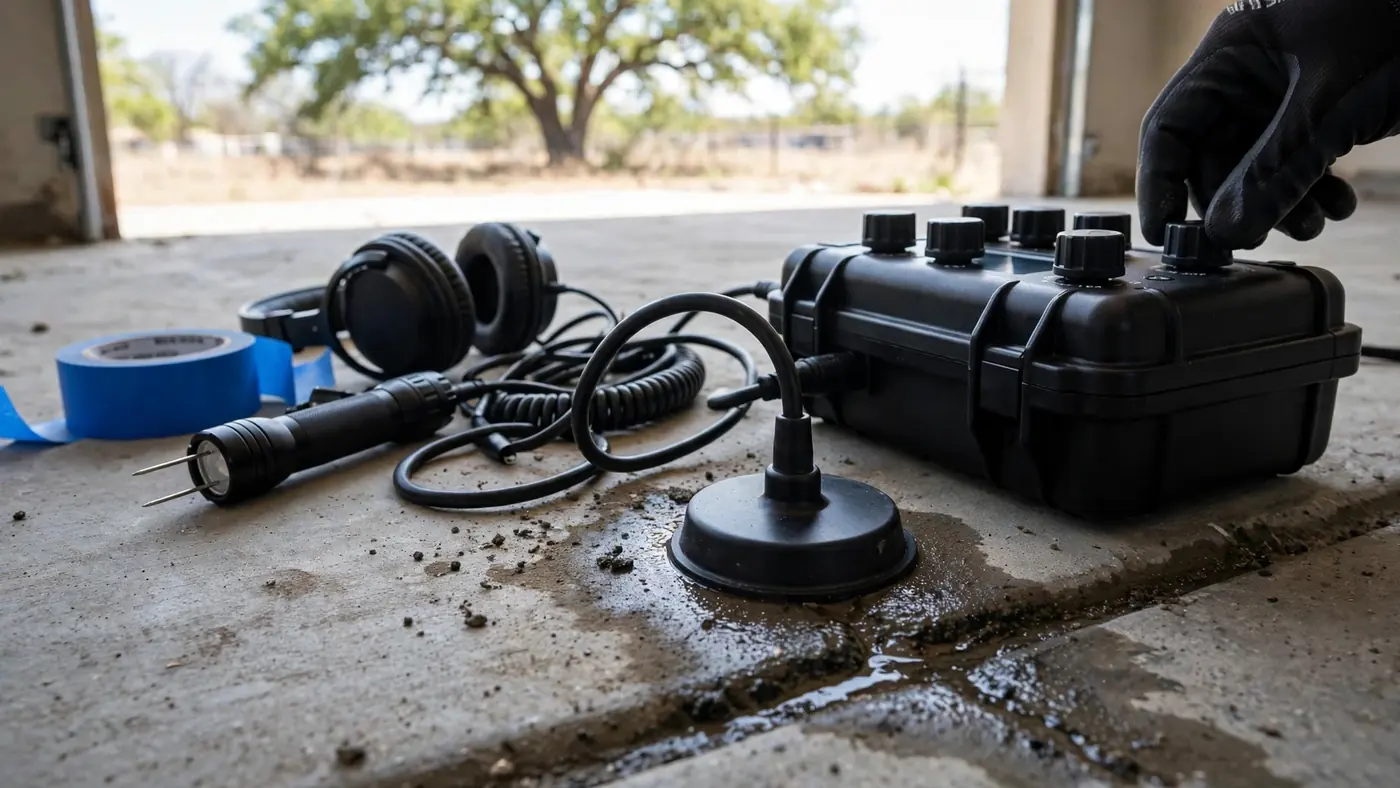
| Tool | What it does |
|---|---|
| Acoustic listening device | Hears the sound of water escaping through the slab. |
| Thermal imaging camera | Shows warmth from a leaking hot line. |
| Moisture meter | Finds damp flooring and concrete. |
| Pressure test | Identifies which line is leaking. |
| Line tracer | Follows a pipe path under the slab. |
A good locate marks the leak on the floor within a foot or so, so an opening is small. Our leak detection page covers the full process, and slab leak repair lays out the repair choices.
Why slabs leak in West Orange County
Central Florida homes sit on slabs over sandy soil. Pipes in or under the slab can chafe, corrode or fail at a joint. Soil movement after heavy rain stresses lines, and some builders ran pipe with tight turns that wear over time. A line that sat quietly for twenty years can fail suddenly after a shift.
The cause also matters for the fix. A chafed line may fail again. A corroded section may mean other sections are close behind.
What to do while you wait
- Shut off the main if water is poolingIt stops the leak and the meter.
- Keep power away from wet floorsTurn off breakers for wet rooms.
- Move belongingsLift items off damp flooring.
- Record the meterNote the reading and time to measure the leak.
- Call the lineWe answer 24/7.
We also dispatch to Horizon West and Oakland.
Reading your water bill for clues
Your utility bill is a free leak detector if you compare months. Look at the usage line, not the dollar amount. A jump of a few thousand gallons that does not match your habits suggests a leak. Irrigation, a pool fill or guests can explain a rise, so rule them out. A leak shows up as steady extra use across a month.
Keep old bills and compare the same month across years. Many utilities offer an online usage graph that shows overnight use. A flat line near zero overnight is normal. A steady trickle overnight is a leak.
After the repair
Once the leak is fixed, watch the meter for a few days. It should sit still when you are away. Keep the written report from the plumber with photos and the leak location. It supports an insurance claim, a builder warranty claim or a future sale. If flooring or drywall was wet, a restoration company should dry it and check for mold.
Costs of waiting
A slab leak wastes water every hour and can erode soil beneath the foundation. Flooring, baseboards and drywall suffer. Mold can follow within days in warm, wet conditions. Acting early limits all of it. Insurance companies also expect you to act promptly to stop damage.
Local questions answered
You can spot signs and run the meter test. Locating it exactly needs equipment.
Good equipment narrows a leak to a small area. A careful technician combines several methods.
Not always. Rerouting and lining are options.
Often, yes. Other heat sources can mislead, so confirm with a test.
As soon as you notice a sign. Call the 24/7 line any hour.
Some policies cover damage and access. Ask your insurer before work starts.
If you suspect a slab leak, call (407) 964-8940.