Signs your pipes need replacing
One leak is a repair. A second leak in a few months is a pattern. Rusty or brown water, low pressure that gets worse, pinhole leaks and visible green corrosion on copper are signs the pipes are wearing out. A home with polybutylene or galvanized supply lines is a candidate even before it leaks.
Common reasons homeowners repipe
- Repeat pinhole leaks.
- Discolored water that runs clear after a minute.
- Low pressure that spreads across the house.
- Polybutylene or galvanized pipe found in an inspection.
- A planned remodel that opens the walls anyway.
Which homes are most likely to need it
Winter Garden has two housing stories. The historic neighborhoods near Plant Street have older homes where galvanized pipe may remain. The newer subdivisions, built mostly after 2000 when the city grew from 14,351 to 46,964 residents, use plastic and copper. Polybutylene was used in some homes built between the late 1970s and mid 1990s, so check if your house is from that period.
We identify the material before we say anything about a repipe. Often a camera at an access point or a look at the pipe near the water heater tells us.
PEX or copper
| Material | Strengths | Drawbacks |
|---|---|---|
| PEX | Flexible, fewer fittings, quicker to install, less wall damage | Not for outdoor sunlight exposure, fitting quality matters. |
| Copper | Long record, tolerates heat, rigid | Costs more, can corrode in some water. |
Most repipes today use PEX because it takes less time and less opening of walls. Some owners prefer copper. We discuss your water, your house and your budget, and you choose.
Water quality and what new pipe changes
Winter Garden draws its drinking water from the Floridan Aquifer through deep city wells and does not publish a single hardness number. Mineral content and chemistry vary by tap, so the pipe you choose should suit your water. We suggest testing your own tap before a repipe, because water that attacks copper is a reason to prefer PEX.
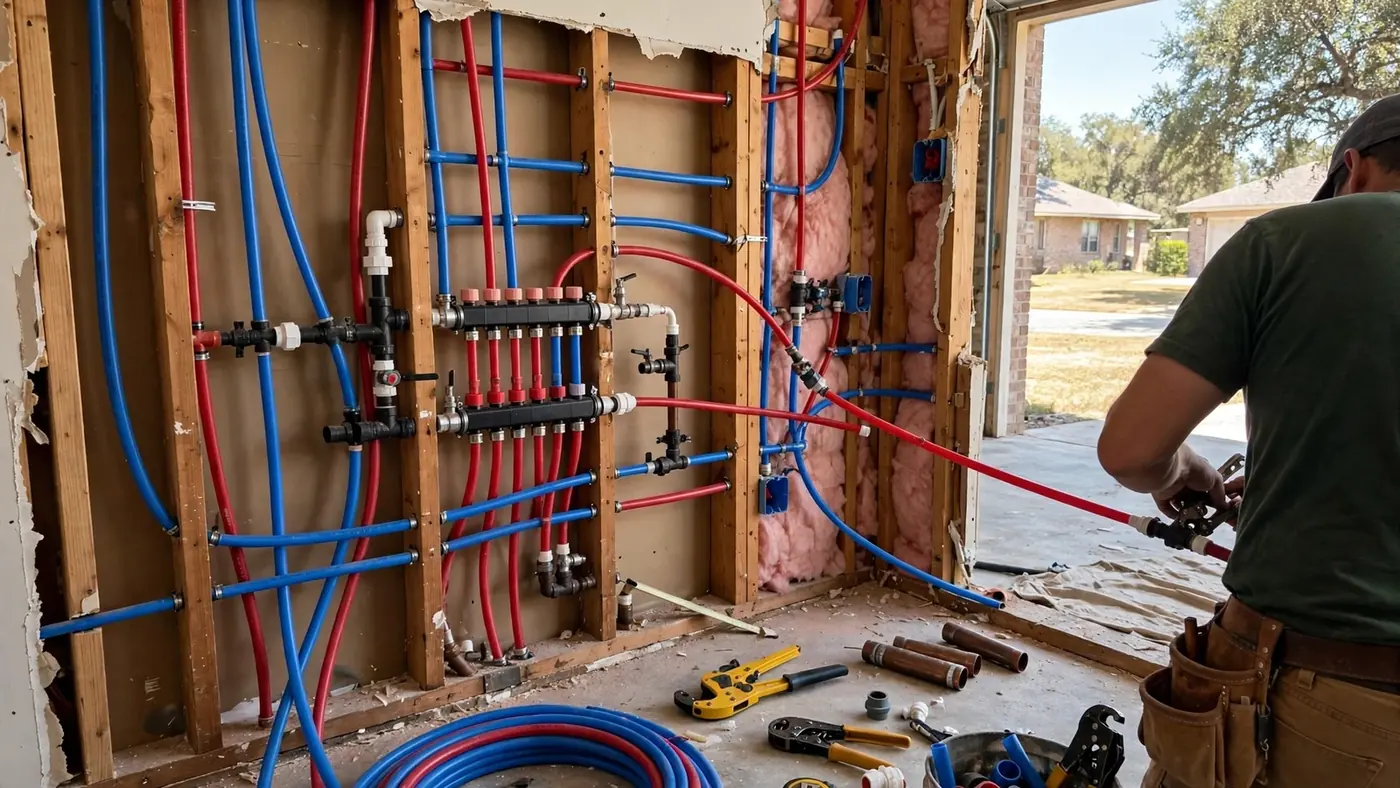
New pipe also lets you fix old annoyances. Fixtures that were starved of flow at the end of a long run can be fed from a better layout. A home run manifold gives each fixture its own line, so a second shower does not steal pressure from the first.
Planning a repipe
- AssessmentWe identify the pipe, check pressure and map the system.
- Scope and priceYou receive the plan and cost drivers before any work.
- PermitA repipe typically needs a permit, which we arrange for our work.
- InstallationNew lines run through attics and walls with minimal openings.
- Testing and patchingWe pressure test, and drywall patching is handled by a separate trade.
Most repipes take a few days. Water is off for part of that time. We try to restore water at the end of each workday where possible.
Costs and value
| Factor | Effect |
|---|---|
| House size and layout | More fixtures and more distance cost more. |
| Number of stories | Two story homes take more time. |
| Material | PEX and copper differ in price. |
| Access | Open ceilings and walls are easier. |
| Drywall repair | Priced separately from plumbing. |
A repipe can be cheaper than a series of emergency repairs and the damage they leave. For an active leak see leak detection and slab leak repair. We serve Ocoee and Oakland too.
A repipe follows the Florida Building Code, Plumbing, with approved pipe and fittings, supports and a pressure test at inspection.
Questions we hear from callers
It is usually gray, blue or black plastic with markings like PB2110. Look near the water heater and the main shutoff. If you are unsure, call and we will identify it.
Usually yes. Water is off for part of each day. Some families stay elsewhere for a night or two if the project is large.
Not extensively. PEX can be fished through walls and the attic with small openings. Patching is needed at the openings.
Typically yes. We arrange permits for the plumbing work and the work is inspected.
It depends on material, water and installation. Both PEX and copper have long service lives when installed correctly. We explain what to expect.
Sometimes. Replacing only the worst section can make sense when the rest is sound. We discuss it after the assessment.
To schedule an assessment, call (407) 964-8940.