What trenchless means for a slab
Trenchless is a loose term in plumbing. For sewer lines it means lining or bursting a pipe underground. For a slab leak it means avoiding the breakup of concrete in the floor. Instead of opening the slab, the plumber either coats the inside of the pipe or builds a new route around the slab.
Both options have limits. A leaking joint, a corroded elbow or a long failing run each calls for a different answer.
The three realistic options
| Method | What happens | Good fit | Limits |
|---|---|---|---|
| Epoxy lining | A coating is blown through the pipe to seal pinholes | Copper with small pinholes and no major corrosion | Needs access points and a continuous pipe. |
| Rerouting | New pipe runs through walls or attic | Lines that failed more than once, hot lines under finished floors | Requires openings in walls and more pipe. |
| Spot repair | Slab opened above the leak | One clear leak in an easy spot | Not trenchless, requires slab work. |
We discuss each choice with you, and the best one depends on the pipe, the leak and your finishes.
Why locating comes first
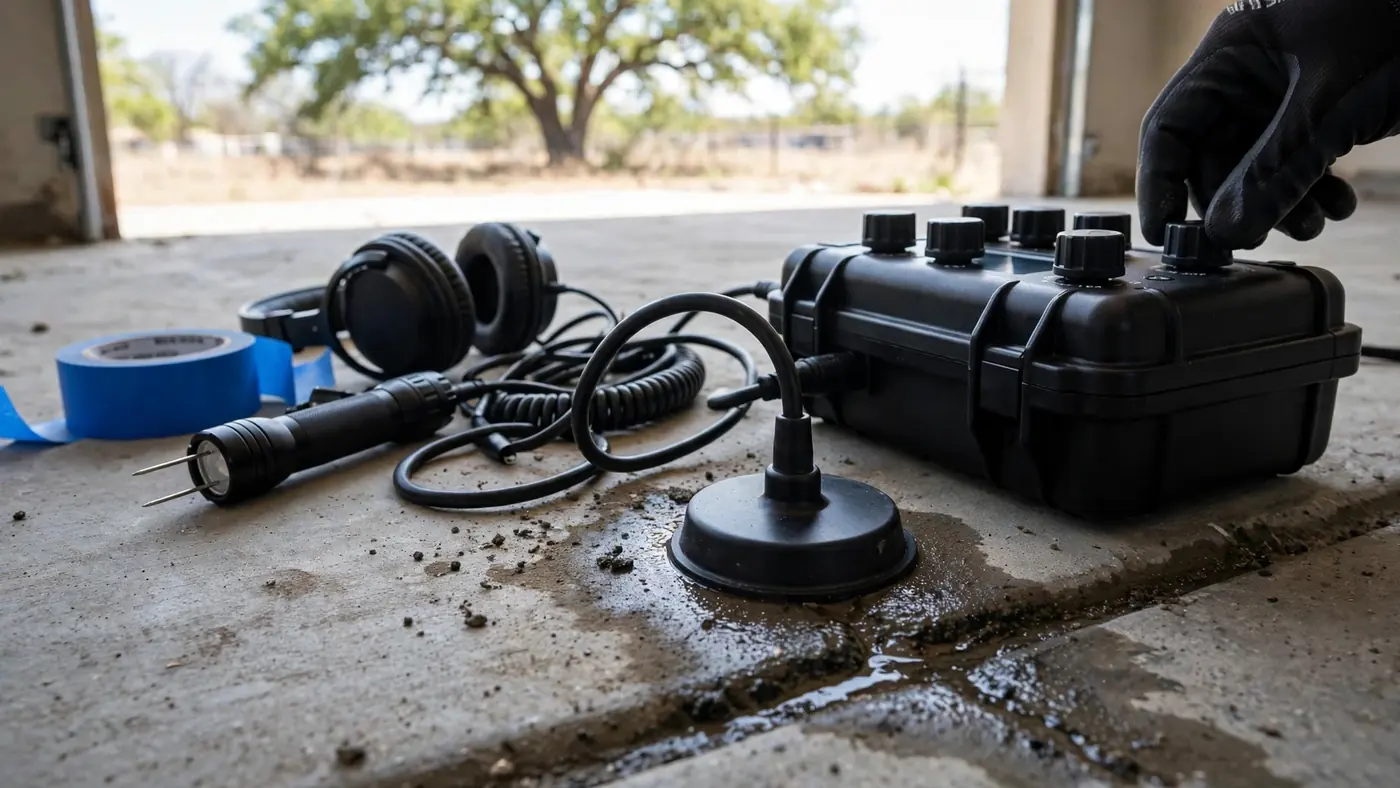
No method works without a good locate. We start with the meter test, then pressure test hot and cold lines. Acoustic equipment hears the leak through the slab, and thermal imaging follows hot lines. A pressure drop test shows which line is leaking. Only then do we choose a repair.
Lining a pipe that has more than one problem can seal one leak and leave another. We tell you if a camera or a test suggests the pipe is too far gone for lining.
Rerouting in a Florida slab home
Most Winter Garden homes sit on slabs, with supply lines running in or under the concrete. Rerouting puts new PEX or copper in the attic or in interior walls and abandons the slab line. It is often the best long term answer when a line has failed twice. It can also move hot water lines out of a spot where they chafed against gravel or concrete.
Reroute work requires openings in drywall, which a drywall contractor patches. It is more work than lining and less than breaking a slab.
How long a repair lasts
Lining adds a layer inside the pipe. It can seal pinholes for years, but it does not fix a pipe that is thin everywhere. A reroute lasts as long as the new pipe, which is long when installed well. A spot repair fixes one point, and the rest of the line stays as it was. Think about the age of the line and how many leaks it has had when choosing.
Warranty terms vary, so ask what a plumber covers and for how long, and get it in writing.
What it costs, in general terms
Prices for slab leak work swing widely, so we do not quote a single number. Locating costs less than repair. Spot repair costs less than rerouting unless finished floors are involved. Lining sits in between and depends on the length of pipe. Ask for the price in writing with the scope described.
Insurance and records
Many policies cover damage a slab leak causes, and some cover access. Document the leak with photos, notes and the written findings of the plumber. Ask your insurer before work begins. Some require an adjuster visit first.
Our leak detection page explains how we locate hidden leaks. For the repair choices and costs see slab leak repair. We cover Oakland and Ocoee too.
Questions to ask a plumber
Before you agree to a method
- How did you locate the leak, and how sure are you.
- What happens if lining does not seal.
- What walls or floors will be opened.
- Is a permit needed and who pulls it.
- What warranty comes with the repair.
Local questions answered
Products used for potable lines are certified for contact with drinking water. Ask for the certification.
Often a day or two depending on the size of the home.
For part of the day, yes. We plan around it.
Usually yes.
It depends. Lining can cost less than breaking a slab. Rerouting can cost more than a spot repair but may prevent repeat leaks.
Shut off the main and call. The line is answered 24/7.
If you hear water under the floor, call the 24/7 line.